Business
The New Local SEO Playbook: Brand Visibility vs. Intent Visibility
Discover the critical differences between brand and intent visibility in the age of AI. This guide reveals how to optimize your local business for engines like ChatGPT and Gemini to ensure you're found by the right customers.
By Frank Marino · · 5 min read
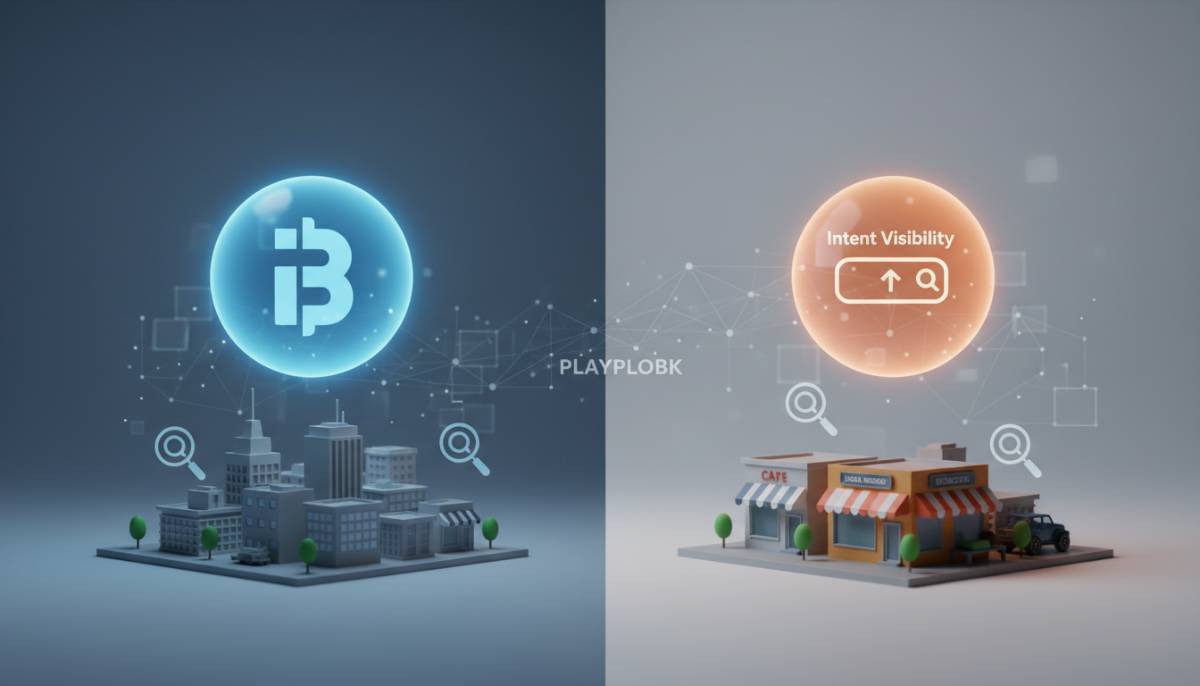
In the world of local search, there is a massive difference between being found by people who already know your name and being discovered by people who just need a problem solved. This is the core of brand visibility vs. intent visibility. As AI-driven search continues to reshape how we find information, local businesses can no longer rely on brand recognition alone. To survive, you have to optimize for the exact moment a consumer realizes they have a specific need.
What is the difference between brand visibility and intent visibility?
Think of brand visibility as the "loyalist" search and intent visibility as the "problem-solver" search. A brand query happens when someone types "Starbucks" into Google Maps because they want that specific experience (and perhaps that very specific roast). That’s brand search visibility—you’re the destination.
An intent query, however, is fueled by a need. This is the person typing "best coffee near me" or asking an AI like ChatGPT, "Where can I get a quiet latte and a decent croissant in downtown Chicago?"
Intent-based visibility is about being the answer to a question. In the past, we called this "generic search," but in the AI era, it’s about relevance. If you own a plumbing company called "A-1 Plumbing," your brand visibility is great for your existing customers. But if you aren't optimized for the intent of "my water heater is leaking," you’re invisible to the most profitable—and urgent—segment of the market.
Why does brand search visibility matter for local businesses?
If intent is how you get new customers, brand search visibility is how you keep them and build authority. When someone searches for your specific name on Apple Maps or Yelp, they’ve already made up their mind. They aren’t browsing; they’re looking for your hours or your phone number to seal the deal.
But there’s a deeper layer to this in the age of AI search optimization. Your brand name serves as a trust signal. When AI models like Gemini or Claude see your brand mentioned consistently across the web—on TripAdvisor, the BBB, and local news outlets—they build a "knowledge graph" that associates you with quality and reliability. In a way, your brand’s digital footprint acts as a resume. The more reputable your brand appears to the AI, the more likely it is to recommend you when a user asks a broader, intent-based question.
How do I improve intent-based search visibility?
To capture intent, you have to stop thinking like a business owner and start thinking like a customer in a crisis. People don’t usually search for "HVAC solutions"; they search for "why is my AC blowing warm air?"
Improving intent visibility requires saturating your Google Business Profile and local directories with the specific services you provide and the problems you fix. Use tools like BrightLocal or Moz Local to ensure your data is consistent everywhere. Don’t just list "Plumbing"—mention specific brands you service, like Rheem or Kohler, and name the specific neighborhoods you cover. AI search engines like Perplexity look for these "named entities" to determine if you are the most relevant match for a hyper-local query.
What is the new local SEO for AI search?
Local SEO for AI search is essentially the process of making your business data "machine-readable." Traditional SEO was a game of keywords and backlinks. AI search is a game of context and entities. When an AI tries to answer a local question, it looks for structured data and mentions from authoritative, high-trust sources.
This means you need to be active on the platforms that AI engines use for training data—Yelp, Foursquare, and even Instagram. The new playbook requires treating your business data as a product. Use Apple Business Connect to manage your presence on iPhones and ensure your Schema markup is clean enough for a robot to parse instantly. The goal is to make it impossible for an AI to ignore you when it’s scanning the local landscape for a solution.
Why should I focus on AI search optimization for local business?
If you aren't optimizing for AI, you’re betting that consumer behavior won't change. But history shows that humans gravitate toward the path of least resistance. If ChatGPT can provide the three best mechanics in Austin without a user having to wade through a page of sponsored links and pop-up ads, they’re going to take that shortcut every time.
Optimizing for AI search isn't just a trend; it's future-proofing. It ensures that when someone asks their smart speaker or AI assistant for help, your business is the one that gets the shout-out. It’s the difference between being the lead recommendation and being a footnote that no one bothers to read.
Frequently Asked Questions
How can I track my brand visibility vs. intent visibility?
The easiest way is to use Google Search Console or Semrush to filter your traffic. Compare "branded" keywords (those containing your business name) against "non-branded" keywords (those describing your services) to see which is driving more leads.
What is the fastest way to improve local SEO for AI search?
Start with your Google Business Profile. Make sure it is 100% complete with high-res photos, current hours, and—most importantly—detailed descriptions of every individual service you offer.
Does social media impact my AI search visibility?
Absolutely. AI models are trained on massive datasets that include public social media posts. Frequent mentions and engagement on social platforms help these models understand your brand’s reputation and relevance.
Why should I use Apple Business Connect for my local shop?
Apple Business Connect feeds directly into the Apple ecosystem. This ensures that anyone using an iPhone, Mac, or Siri gets the most accurate, verified information about your business.
What is an example of an intent query for a local lawyer?
A brand query would be "Smith & Associates Law." An intent query would be "best car accident attorney for neck injuries in Chicago."
How do AI search engines verify local business data?
They cross-reference your information across multiple "nodes"—your website, Yelp, government records, and user reviews. If the data matches across the board, the AI has higher confidence in recommending you.